
Crossfield® supplies Chassis Management solutions, VPX plug-in cards and advanced computing and storage systems in support of the Module Open Systems Approach (MOSA).
Innovative Solutions to New Challenges
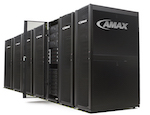
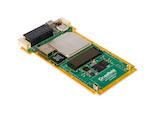
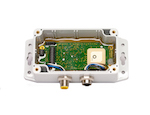
Crossfield Technology’s research and development team specializes in creating innovative solutions for challenging applications in commercial, industrial, and defense markets. In applications such as real-time sensor data acquisition and physics-based simulation, our Instrumentation Gateways connect modular sensors and transducers to real-time signal processors using ultra-high-speed fiber optic links with data rates approaching 100 Gbps. In applications such as environmental sensing and data logging, our wireless sensors communicate at much slower speeds but can operate for extended periods of time, a year or more, on battery power. For embedded systems, Crossfield is applying ultra-high-performance storage, networking and processing technologies to SWaP constrained applications. Our VPX Instrumentation Gateway and Solid-state Storage Module (SSM) plug-in cards are aligned with the upcoming SOSA standard.
Crossfield supplies U.S.-sourced Sensor Open Systems Architecture (SOSA)-aligned / Hardware Open System Technologies (HOST) / VITA 46.11 / IPMI chassis management solutions with teams located in Texas and Colorado. Our chassis management products include an Intelligent Platform Management Controller (IPMC), Chassis Management Controller (ChMC), Chassis Manager (ChM), and a Chassis Manager development system called the ChassisBerry.
Crossfield supplies U.S.-sourced Sensor Open Systems Architecture (SOSA)-aligned / Hardware Open System Technologies (HOST) / VITA 46.11 / IPMI chassis management solutions with teams located in Texas and Colorado. Our chassis management products include an Intelligent Platform Management Controller (IPMC), Chassis Management Controller (ChMC), Chassis Manager (ChM), and a Chassis Manager development system called the ChassisBerry.